
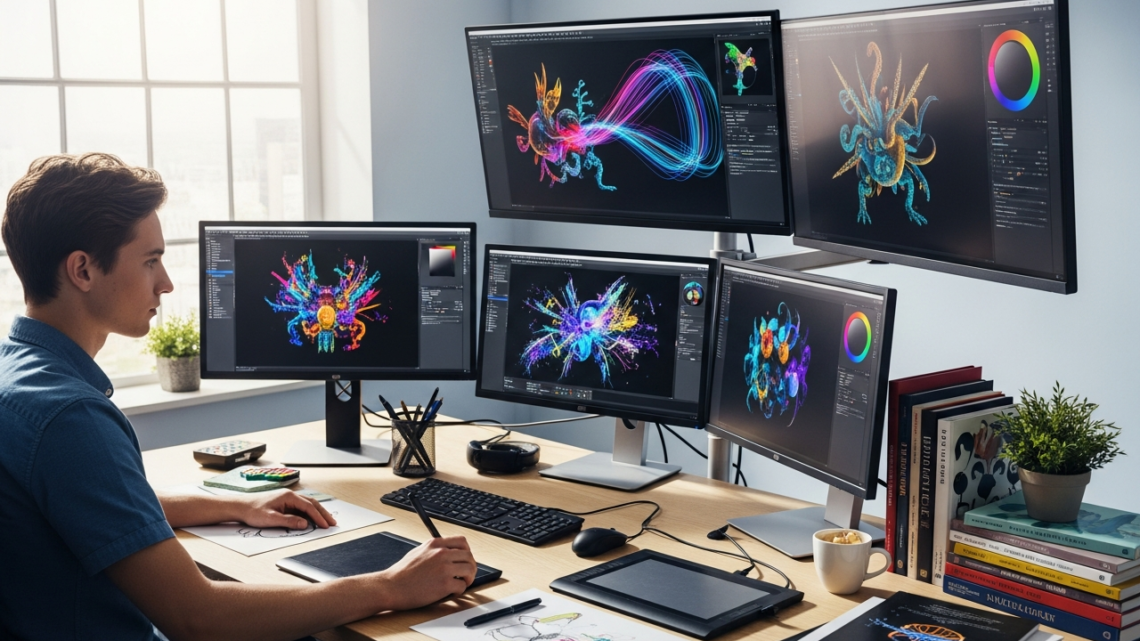
Canada’s visual effects industry is experiencing unprecedented growth, with Vancouver and Montreal emerging as global VFX powerhouses alongside established studios in Toronto. Major productions from Marvel blockbusters to streaming series are driving demand for skilled junior FX artists, making portfolio quality the decisive factor in landing that first industry role. Canadian employers receive hundreds of applications for each junior position, with hiring decisions often made within the first 30 seconds of viewing a demo reel.
Success in the Canadian VFX market requires more than technical proficiency—it demands a strategic approach to portfolio construction that demonstrates both artistic vision and production-ready skills. This comprehensive guide examines what Canadian employers specifically seek in junior FX artist portfolios, covering education pathways, essential technical demonstrations, optimal reel structure, and industry-specific requirements that can make the difference between landing an interview or being overlooked in a competitive field where entry-level positions often attract 200+ applicants.
Education and Training Requirements
According to the Government of Canada’s Job Bank, junior FX artist positions typically require post-secondary education in computer animation, digital media, or related fields, though the pathway to employment varies significantly across the industry. Canadian employers increasingly value demonstrable skills over credentials alone, with many successful junior artists entering the field through intensive diploma programs, specialized training academies, or structured self-directed learning combined with mentorship opportunities.
Leading Canadian institutions like Vancouver Film School, Emily Carr University, and Sheridan College have developed curriculum specifically aligned with industry demands, often featuring direct collaboration with major studios. These programs emphasize portfolio development as a core component, with graduates typically completing 3-5 professional-quality projects that directly translate to employable skills. The portfolio impact from structured programs often provides crucial industry connections and feedback loops that significantly improve job placement rates.
Diploma vs Self-Taught Paths
The choice between formal education and self-directed learning represents a critical decision point for aspiring junior FX artists, with each approach offering distinct advantages and challenges in the Canadian market.
- Formal Education Advantages: Structured curriculum, industry mentorship, networking opportunities, and portfolio feedback from experienced professionals
- Formal Education Disadvantages: Higher cost, rigid timelines, potentially outdated software versions, and less flexibility for specialization
- Self-Taught Advantages: Lower cost, flexible pacing, ability to focus on cutting-edge techniques, and direct industry software access
- Self-Taught Disadvantages: Lack of structured feedback, limited networking opportunities, potential skill gaps, and difficulty accessing industry-standard pipeline knowledge
- Hybrid Approach Benefits: Combines formal foundation with specialized self-directed learning, maximizing both structure and flexibility for portfolio development
Recommended Canadian Programs
Canadian educational institutions have developed specialized programs that align directly with industry hiring preferences, with many featuring direct studio partnerships and placement programs.
| Program | Location | FX Focus | Portfolio Outcome |
|---|---|---|---|
| Vancouver Film School VFX | Vancouver, BC | Houdini, Nuke, Maya FX | 5-7 professional shots with breakdowns |
| Think Tank Training Centre | North Vancouver, BC | Procedural effects, simulations | Industry-ready demo reel under 90 seconds |
| Sheridan Animation | Oakville, ON | Character FX, cloth, hair | Character-focused effects portfolio |
| LaSalle College VFX | Montreal, QC | Particle systems, destruction | Bilingual portfolio with French breakdown options |
| Emily Carr Digital Media | Vancouver, BC | Experimental FX, R&D focus | Creative and technical innovation showcase |
| DAVE School Toronto | Toronto, ON | Real-time VFX, Unreal Engine | Game and film crossover portfolio |
Essential Technical Skills for Portfolios
Canadian employers prioritize specific technical competencies that align with production pipeline requirements, with Houdini expertise ranking as the most sought-after skill across major studios. Junior FX artists must demonstrate proficiency in procedural workflows, basic VEX scripting, and Python automation, as these capabilities directly translate to productivity in fast-paced production environments where technical problem-solving separates competitive candidates from the broader applicant pool.
Portfolio demonstrations should showcase not just software proficiency but understanding of production constraints, optimization techniques, and collaborative workflows that reflect real-world studio demands. Canadian employers particularly value artists who can articulate their technical choices and demonstrate scalable approaches that work within established pipeline frameworks.
| Skill | Software | Why Employers Want It | Portfolio Demo Tip |
|---|---|---|---|
| Procedural Modeling | Houdini | Scalable, director-friendly iteration workflows | Show parameter changes creating varied results |
| Particle Simulations | Houdini, Maya | Core requirement for destruction and environment FX | Include close-up detail and wide establishing shots |
| Fluid Dynamics | Houdini FLIP, Maya Bifrost | High-demand for water, blood, magical effects | Demonstrate interaction with live-action plates |
| Pyro Simulations | Houdini Pyro, EmberGen | Essential for action sequences and explosions | Show artistic control over physically accurate sims |
| Compositing Integration | Nuke, After Effects | Understanding of full pipeline workflow | Include render passes and comp breakdown |
| Scripting Automation | Python, VEX | Efficiency and problem-solving capabilities | Document custom tools with before/after examples |
| Lighting and Shading | Arnold, Mantra, V-Ray | Complete shot ownership and artistic vision | Show lighting setups that enhance FX believability |
Advanced Pipeline Integration Skills
Beyond core technical abilities, Canadian employers increasingly seek junior artists who understand production pipeline integration and collaborative workflows. This includes familiarity with version control systems, asset management protocols, and the ability to optimize simulations for downstream departments. Demonstrating these skills in portfolio breakdowns can significantly differentiate candidates in a competitive market.
Demo Reel Structure and Best Practices
The demo reel represents the most critical component of any junior FX artist portfolio, with Canadian employers typically making initial screening decisions within 30 seconds of viewing. Industry feedback consistently emphasizes that shorter, more focused reels significantly outperform longer compilations, with optimal length remaining under two minutes and featuring only the strongest work with comprehensive breakdowns that demonstrate both artistic vision and technical competency.
Successful demo reels follow a strategic structure that immediately captures attention with the strongest shot, maintains consistent pacing throughout, and concludes with memorable work that reinforces the candidate’s unique strengths. Canadian studios particularly value reels that demonstrate production awareness, showing how effects integrate seamlessly with live-action footage and support storytelling rather than overwhelming the narrative with technical showcasing for its own sake.
- Open with your strongest shot – Place your most impressive and polished work within the first 10 seconds to immediately capture employer attention and set quality expectations
- Maintain consistent technical quality – Every shot should meet professional standards; remove any work that appears incomplete, poorly composed, or technically inferior to your best pieces
- Show variety within specialization – Demonstrate range within your chosen FX specialty (particles, fluids, destruction) rather than attempting to cover every possible effect type superficially
- Include seamless integration shots – Show effects that believably interact with live-action plates, demonstrating understanding of lighting, shadows, and realistic physical behavior
- Provide clear breakdown sections – Follow main shots with technical breakdowns showing wireframes, simulation stages, and render passes to demonstrate your complete workflow understanding
- End with memorable impact – Conclude with a shot that reinforces your artistic vision and leaves a lasting positive impression, avoiding weak or repetitive content
- Maintain professional presentation – Include contact information, ensure consistent aspect ratios, and provide clean audio mixing without distracting music that competes with your visual work
Ideal Reel Length and Content
Canadian employers provide consistent feedback regarding optimal demo reel specifications, with clear preferences varying by experience level and position type. Junior positions require more focused, curated content that demonstrates potential rather than extensive experience.
| Experience Level | Max Length | Shot Count | Breakdown Style |
|---|---|---|---|
| Entry Level/Student | 60 seconds | 3-4 shots | Simple before/after comparisons |
| Junior FX Artist | 90 seconds | 4-6 shots | Technical breakdowns with wireframes |
| Intermediate | 2 minutes | 6-8 shots | Detailed pipeline documentation |
| Senior Level | 3 minutes max | 8-12 shots | Leadership and mentorship examples |
| Specialized Demo | 45 seconds | 2-3 shots | Deep technical dive into single specialty |
Common Reel Mistakes to Avoid
Canadian hiring managers consistently identify specific portfolio mistakes that immediately disqualify otherwise talented candidates. These errors often reflect inexperience with professional standards rather than lack of artistic ability.
- Grammar and spelling errors in titles – Professional presentation standards require perfect spelling and grammar in all text elements, as errors suggest lack of attention to detail
- Sloppy composition and framing – Poor camera angles, awkward compositions, or inconsistent aspect ratios immediately signal amateur-level work regardless of technical FX quality
- Including outdated or student work – Mixing professional-quality recent work with older student projects creates inconsistent quality perception and dilutes portfolio impact
- Overly complex technical breakdowns – While technical demonstration is important, overwhelming viewers with excessive technical detail can obscure artistic achievement and storytelling contribution
- Generic or inappropriate music choices – Distracting soundtracks, copyrighted music, or audio that competes with visual content detracts from professional presentation and may create legal concerns
- Excessive length with repetitive content – Including multiple similar shots or extending reel length beyond optimal duration suggests inability to self-edit and curate effectively
Key Portfolio Project Types
Canadian VFX studios consistently seek specific types of effects demonstrations that align with their primary production demands, particularly focusing on blockbuster film and high-end television work that requires seamless integration with live-action footage. Understanding which project types resonate most strongly with hiring managers allows junior artists to prioritize their portfolio development efforts toward maximum impact demonstrations.
The most valued portfolio projects demonstrate not just technical execution but artistic sensibility and production awareness, showing effects that enhance storytelling rather than overwhelming narrative elements. Canadian employers particularly appreciate projects that show restraint and subtlety alongside spectacular displays, reflecting the industry’s evolution toward more sophisticated and believable digital effects integration.
| Effect Type | Example | Canadian Studio Relevance | Breakdown Essential? |
|---|---|---|---|
| Destruction Simulations | Building collapse with debris | High demand for superhero and action films | Yes – show constraint setup |
| Particle Atmospherics | Dust, smoke, magical sparkles | Essential for environment enhancement | Yes – demonstrate volume integration |
| Water Simulations | Ocean waves, splashes, waterfalls | Constant need across multiple genres | Yes – show surface detail control |
| Fire and Explosions | Realistic fire, stylized energy blasts | Core requirement for action sequences | Yes – show artistic control methods |
| Cloth and Soft Bodies | Flowing capes, creature skin | Character work and hero moments | Optional – focus on final result |
| Environmental FX | Weather, atmospheric effects | Subtle enhancement for dramatic scenes | No – emphasize integration quality |
| Procedural Animation | Swarm behavior, growth systems | Specialized demand for creature work | Yes – demonstrate parameter control |
| Blood and Gore | Weapon impacts, creature effects | Horror and action genre requirements | Optional – show viscosity control |
Project Complexity Considerations
While technical complexity can demonstrate advanced skills, Canadian employers often prefer well-executed simple effects over ambitious projects that exceed junior-level capabilities. Focus on perfecting fundamental techniques with strong artistic direction rather than attempting cutting-edge simulations that may appear technically impressive but lack production polish and integration quality.
Soft Skills Demonstrated in Portfolios
Beyond technical proficiency, Canadian employers increasingly evaluate junior FX artists based on soft skills that predict success in collaborative production environments. Portfolio breakdowns serve as crucial windows into an artist’s communication abilities, organizational thinking, and collaborative mindset—qualities that often determine long-term career success more than raw technical ability. Clear, articulate breakdowns demonstrate not just what was accomplished but how problems were solved and how the work fits within larger production contexts.
The most successful junior portfolios subtly communicate teamwork capabilities through detailed attribution of collaborative elements, showing respect for pipeline constraints and downstream departments. Canadian studios particularly value artists who demonstrate awareness of production realities, including budget constraints, timeline pressures, and the need for iterative director feedback, as these qualities translate directly to reduced training overhead and faster integration into established production teams.
Communication and Documentation Skills
Portfolio breakdowns provide direct insight into an artist’s ability to communicate complex technical processes clearly and concisely. Canadian employers view strong documentation skills as essential for collaborative workflows, with clear explanations indicating both technical understanding and the ability to share knowledge effectively with team members across different specialties. Artists who can articulate their creative decisions and technical approaches demonstrate readiness for the collaborative problem-solving that defines professional VFX production.
Effective portfolio documentation goes beyond simple technical specifications to include creative reasoning, alternative approaches considered, and lessons learned during development. This level of thoughtful reflection indicates artistic maturity and continuous learning mindset that Canadian employers highly value in junior candidates who will need to adapt quickly to studio-specific workflows and evolving project requirements.
Problem-Solving and Adaptability
Canadian studios face constant technical and creative challenges that require flexible thinking and resourceful problem-solving approaches. Portfolios that highlight creative solutions to technical limitations, adaptation of techniques for specific project needs, or innovative workarounds for software constraints demonstrate the kind of thinking that adds immediate value to production teams. Junior artists who can showcase not just successful results but interesting approaches to achieving those results stand out significantly in competitive hiring situations.
The ability to work within constraints—whether technical, artistic, or budgetary—represents a crucial professional skill that portfolios can effectively demonstrate through project case studies. Showing how creative goals were achieved despite limitations, or how technical approaches were modified to meet production requirements, communicates real-world production awareness that many junior candidates lack but employers desperately seek.
Canadian Industry Specifics
Canada’s VFX industry operates with distinct characteristics that influence hiring preferences and portfolio expectations, particularly in major production hubs where different studios specialize in specific types of content. Understanding these regional differences and studio preferences allows junior artists to tailor their portfolios more effectively for target employers.
The Canadian industry benefits from significant government incentives that attract international productions, creating unique opportunities for junior artists but also intensifying competition for entry-level positions. Studios often work on multiple high-profile projects simultaneously, requiring versatile artists who can adapt quickly to different visual styles and technical requirements within the same employment period.
| Studio Hub | Top Employers | FX Focus | Junior Preferences |
|---|---|---|---|
| Vancouver, BC | ILM, MPC, Sony Imageworks | Blockbuster destruction, creature FX | Houdini proficiency, film-quality polish |
| Montreal, QC | Framestore, DNEG, Rodeo FX | Fantasy, magical effects | Artistic flair, bilingual capability helpful |
| Toronto, ON | Spin VFX, Mr. X, Mavericks VFX | Television, streaming content | Fast turnaround skills, versatility |
| Halifax, NS | DHX Media, Copernicus Studios | Animation, family content | Clean, stylized approach |
| Calgary, AB | Pipeline Studios, Arc Productions | Commercial, corporate content | Reliable execution, client service mindset |
| Ottawa, ON | Mercury Filmworks, Jam Filled | 2D/3D hybrid, TV animation | Traditional animation understanding |
Regional Hiring Patterns and Opportunities
Each Canadian VFX hub operates with distinct hiring cycles and preferences that junior artists can leverage for strategic job searching. Vancouver typically experiences the most competitive hiring environment but also offers the highest concentration of blockbuster film work, while Toronto’s television-focused market often provides more entry-level opportunities with faster hiring decisions. Understanding these regional patterns helps junior artists time their applications and tailor their portfolios to match local industry demands and cultural expectations.
Portfolio Presentation and Sharing
Effective portfolio distribution requires a multi-platform approach that maximizes visibility while maintaining professional presentation standards across all channels. Canadian employers typically discover junior talent through a combination of industry networking, online portfolio platforms, and direct applications, making strategic sharing essential for career advancement in a competitive market where timing and visibility often determine opportunity access.
The most successful junior artists maintain consistent portfolio presentation across all platforms while adapting content format to match each channel’s specific requirements and audience expectations. This coordinated approach ensures that potential employers receive consistent quality impressions regardless of how they initially discover the artist’s work, building confidence in professionalism and attention to detail that influences hiring decisions.
- LinkedIn professional presence – Maintain updated LinkedIn profile with embedded portfolio samples, industry connections, and regular posting about work progress to build professional visibility
- Vimeo for video hosting – Use Vimeo Pro for high-quality video hosting with custom thumbnails, detailed descriptions, and privacy controls that allow password protection for client work
- Personal website with case studies – Create professional website with detailed project breakdowns, technical documentation, and easy navigation that demonstrates web-savvy and personal branding
- ArtStation portfolio showcase – Leverage ArtStation’s industry-focused platform for comprehensive portfolio display with tagging, following capabilities, and direct employer outreach features
- Studio-specific application portals – Adapt portfolio format to meet individual studio requirements, often including specific file formats, resolution requirements, or application process specifications
- Industry event networking – Prepare portfolio materials for in-person networking at SIGGRAPH, VIEW Conference, or local VFX meetups where direct employer contact creates immediate opportunities
- Social media strategic sharing – Use Twitter, Instagram, and industry forums for work-in-progress sharing that builds community engagement and demonstrates ongoing skill development to potential employers
Platform-Specific Optimization Strategies
Each portfolio platform serves different purposes in the Canadian VFX hiring ecosystem, requiring strategic adaptation of content and presentation style. LinkedIn functions primarily for professional networking and industry visibility, demanding polished final results and professional context, while platforms like ArtStation allow for more detailed technical documentation and work-in-progress sharing that can demonstrate artistic process and problem-solving capabilities that employers value.
Understanding platform algorithms and user behavior patterns helps junior artists optimize their content for maximum visibility within target audiences. Vimeo’s professional user base responds well to high-quality technical breakdowns, while social media platforms may favor shorter, more visually striking content that generates engagement and broader visibility among industry professionals who might not actively search traditional portfolio sites.
Professional Follow-Up and Engagement
Successful portfolio sharing extends beyond initial posting to include strategic follow-up and professional engagement that builds lasting industry relationships. Canadian VFX professionals often remember artists who demonstrate genuine interest in their work and studios, making thoughtful engagement more valuable than broad portfolio distribution. This approach requires research into individual studios and professionals, personalized outreach that demonstrates specific interest, and consistent professional behavior that builds reputation within the relatively small Canadian VFX community.
Building authentic professional relationships through portfolio sharing creates opportunities beyond immediate job openings, as industry professionals often recommend talented artists they remember from previous interactions. This long-term approach to portfolio sharing emphasizes relationship building over transactional job seeking, creating sustainable career development that extends beyond individual application cycles and builds lasting professional networks that support continued career growth.
Standing Out as a Junior Applicant
In Canada’s highly competitive VFX market, junior applicants must differentiate themselves beyond technical competency through unique angles, specialized interests, and demonstrated commitment to professional growth. The most successful candidates often combine traditional portfolio strength with distinctive personal projects, industry involvement, or specialized knowledge that adds immediate value to potential employers while showing long-term career potential.
Internships and mentorship relationships provide crucial differentiators that separate competitive candidates from the broader applicant pool, offering not just skill development but industry connections and portfolio feedback that significantly improve hiring prospects. Canadian studios often prioritize candidates who demonstrate initiative through unpaid internships, volunteer work on indie projects, or participation in industry organizations, as these activities indicate genuine passion and professional commitment that extends beyond simply seeking employment.
Building Industry Connections and Experience
Canadian VFX professionals consistently emphasize networking and relationship building as critical factors in junior hiring decisions, often preferring candidates with personal recommendations over unknown applicants with stronger portfolios. Attending industry events, participating in online communities, and engaging genuinely with established professionals creates visibility and credibility that significantly improves job prospects while providing access to insider knowledge about upcoming opportunities and studio culture that helps in interview preparation.
Mentorship relationships offer particularly valuable career development, providing portfolio feedback, industry insights, and potential job recommendations that can accelerate career progression beyond what traditional applications alone achieve. Many successful junior artists identify mentors through educational programs, industry events, or professional organizations, maintaining these relationships through consistent communication and genuine interest in learning rather than purely transactional job-seeking behavior.